Sports betting has never been more popular than it is today.
With just a smartphone and an internet connection, anyone can place a wager on football, basketball, tennis, cricket, or almost any other sport imaginable. Live betting, cash-out options, and attractive promotions have made the experience faster and more engaging than ever before.
For many people, betting adds excitement to watching sports. A match between two mid-table football clubs suddenly becomes must-watch television when there’s a stake involved. Every corner, every shot, and every last-minute goal suddenly feels far more important.
And sometimes, betting pays off.
A well-researched prediction lands, an underdog pulls off a surprise victory, and a modest stake turns into a satisfying profit. Those moments are part of what attracts millions of bettors around the world.
However, winning is only one side of the story.
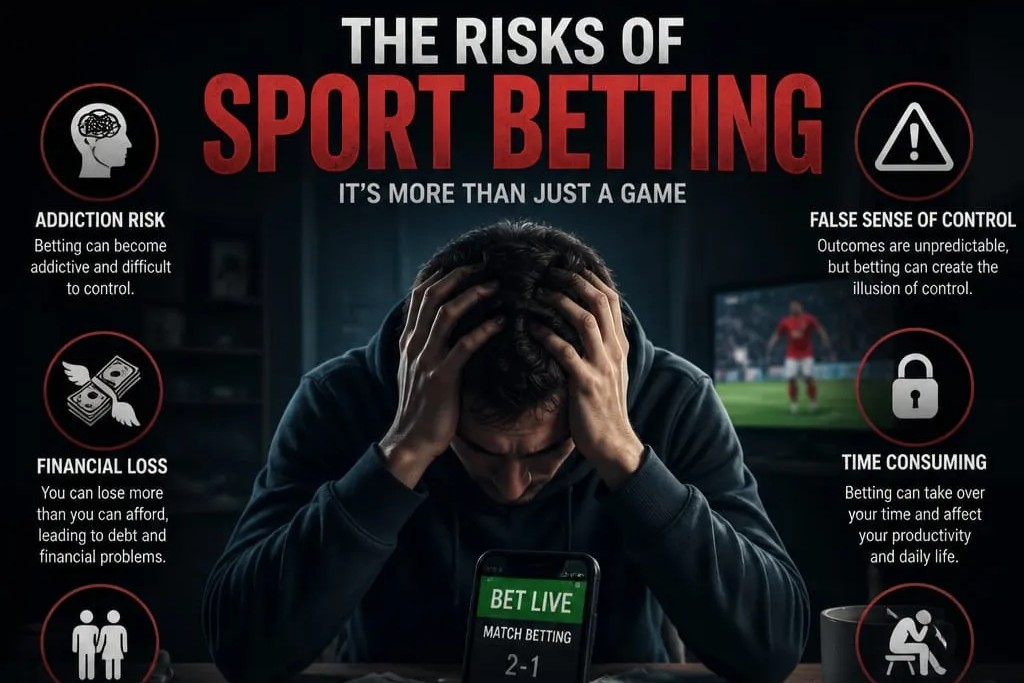
Behind every exciting victory lies a reality that many new bettors overlook: sports betting is unpredictable, financially risky, and emotionally demanding. For every winning ticket shared on social media, there are countless losing bets that never get posted.
The truth is that betting can be enjoyable when approached responsibly, but it can also become expensive when emotions replace discipline.
This article explores the real risks of sports betting, why even experienced bettors lose, and how you can approach betting in a safer and more responsible way.
Why Sports Betting Attracts Millions
The popularity of sports betting isn’t difficult to understand.
Sports are unpredictable by nature. Fans already enjoy discussing tactics, predicting scores, and debating which team is stronger. Betting simply adds another layer of excitement to something people already love.
Many bettors also enjoy the challenge of researching teams, analyzing statistics, and looking for value before placing a wager. For them, the process of making an informed prediction can be just as rewarding as the outcome itself.
Then there is the possibility of winning money.
Turning a small stake into a much larger payout naturally appeals to people. Stories of successful bets spread quickly across social media, online forums, and among friends. These stories often inspire others to believe they can achieve similar results.
What receives far less attention, however, are the unsuccessful bets that happen every single day.
The Reality Behind the Big Wins
Most people have seen screenshots showing impressive betting wins.
Someone turns $10 into $500.
Another bettor correctly predicts multiple matches and wins thousands.
These moments certainly happen.
But they represent only a small part of the overall picture.
For every successful accumulator that lands, countless others fall apart because of one unexpected result.
Football alone constantly reminds us that predictions are never guarantees. A league leader can lose to a team fighting relegation. A dominant side can receive an early red card. A penalty can be missed. A goalkeeper can produce the performance of a lifetime.
These moments are part of what makes sports entertaining—but they also make betting inherently risky.
Successful bettors understand that losses are inevitable. They don’t expect to win every bet because no strategy, system, or prediction model can remove uncertainty from sports.
Why Bookmakers Usually Stay Profitable
One question many beginners ask is simple:
“If so many people win bets, how do bookmakers continue making money?”
The answer lies in probability and margins.
Bookmakers don’t simply predict who they think will win a match. Their odds are designed to reflect probabilities while also including a margin that allows the bookmaker to remain profitable over time.
This means that even when bettors win individual wagers, bookmakers expect to earn money across thousands or millions of bets placed over weeks, months, and years.
That doesn’t mean bettors cannot make profits.
Some skilled bettors consistently find value where they believe the odds underestimate a team’s chances. Others specialize in specific leagues or markets where they have developed expertise.
However, even experienced bettors understand that profitability comes from long-term discipline rather than constantly winning individual bets.
Winning Doesn’t Eliminate Risk

One of the biggest misconceptions about betting is the belief that winning means the risk has disappeared.
In reality, success can sometimes increase risk.
After a series of wins, confidence naturally grows. Confidence itself isn’t a problem, but overconfidence often is.
A bettor who previously researched every match carefully may suddenly begin placing larger bets based purely on instinct.
They may start believing they have “figured out” sports betting.
Unfortunately, sports rarely reward overconfidence for long.
Eventually, unexpected results appear—as they always do.
The difference between disciplined bettors and emotional bettors often becomes clear during these moments.
Disciplined bettors accept losses as part of the process.
Emotional bettors attempt to recover everything immediately.
The Psychology Behind Betting Decisions
Betting isn’t only about statistics and probabilities.
It’s also about human psychology.
Emotions influence decision-making far more than many people realize.
Excitement after a big win may encourage larger stakes.
Frustration after a narrow loss may tempt someone to place another bet immediately.
Fear may cause a bettor to cash out too early.
Greed may convince them to risk more than they originally planned.
Learning to recognize these emotions is one of the most valuable skills any bettor can develop.
Successful decision-making requires patience, consistency, and self-control—not simply predicting the correct score.
Chasing Losses Is One of the Biggest Mistakes
Imagine this situation.
A bettor loses their first wager of the day.
Instead of accepting the result, they immediately place another bet with a larger stake, hoping to recover everything.
That second bet also loses.
Now frustration increases.
Another larger bet follows.
This cycle is commonly known as chasing losses.
It is one of the fastest ways for a manageable setback to become a much bigger financial problem.
The reality is that every bettor experiences losing days.
Accepting those losses and sticking to a pre-planned budget is often far wiser than attempting to recover everything immediately.
Sometimes the best betting decision is deciding not to place another bet at all.
Why Bankroll Management Matters
One concept separates disciplined bettors from impulsive ones more than almost anything else:
Bankroll management.
Your bankroll is simply the amount of money you have set aside specifically for betting.
Responsible bettors treat this amount as separate from money needed for essential expenses such as rent, food, education, healthcare, or bills.
Many experienced bettors also avoid risking large portions of their bankroll on a single prediction.
Instead, they use consistent staking plans that help reduce the impact of inevitable losing streaks.
Bankroll management cannot guarantee profits.
What it can do is help bettors stay in control, reduce emotional decision-making, and avoid unnecessary financial pressure.
Betting Should Never Replace Your Income
One of the most dangerous misconceptions is the belief that betting provides guaranteed income.
While some professional bettors exist, they represent a very small percentage of everyone who places sports wagers.
Professional betting requires extensive research, statistical analysis, disciplined bankroll management, and the emotional resilience to handle long periods of variance.
For most people, sports betting is far better viewed as entertainment rather than a dependable source of income.
Treating betting as a guaranteed way to pay bills creates pressure that often leads to poor decisions.
The Dangers of Unrealistic Expectations
The internet often highlights extraordinary success stories.
People naturally enjoy sharing their biggest wins.
Very few people post screenshots showing the dozens of unsuccessful bets that came before them.
This creates an unrealistic impression that consistent winning is easy.
In reality, even excellent analysts experience losing streaks.
No prediction model is perfect.
No betting strategy eliminates uncertainty.
Understanding this helps create healthier expectations.
Winning becomes enjoyable.
Losing becomes manageable.
Neither outcome completely controls your emotions.
Practical Tips for Responsible Sports Betting
If you choose to participate in sports betting, consider the following habits:
- Decide on a betting budget before placing any wagers.
- Never bet money needed for essential living expenses.
- Accept that losing bets are part of sports betting.
- Avoid increasing stakes simply because previous bets lost.
- Take breaks when emotions begin influencing decisions.
- Focus on research rather than impulse.
- View betting as entertainment instead of guaranteed income.
- Remember that no prediction is certain.
These simple habits may not guarantee profits, but they can help reduce unnecessary risks and encourage healthier betting decisions.
Final Thoughts
Sports betting has become an exciting part of modern sports culture.
For many people, it adds entertainment, encourages deeper analysis of matches, and occasionally produces memorable wins.
However, winning is never the complete story.
Every bet carries uncertainty.
Every prediction can be wrong.
Every winning streak can eventually come to an end.
Understanding these realities doesn’t mean avoiding betting entirely. Instead, it means approaching betting with realistic expectations, financial discipline, and emotional control.
The most successful bettors are rarely those who chase impossible guarantees.
They are usually the ones who remain patient, manage risk carefully, continue learning, and understand that betting is a long-term activity rather than a shortcut to easy money.
Whether you place one bet a month or several each week, remember that responsible betting isn’t about avoiding risk completely—it is about understanding those risks before making a decision.
Responsible Betting Reminder
Sports betting should always be approached responsibly. Never wager money you cannot afford to lose, and never assume that any prediction, tip, or betting strategy guarantees success. Every sporting event contains uncertainty, which is what makes sports exciting in the first place. Betting should enhance your enjoyment of sport—not become a source of financial or emotional stress.
Frequently Asked Questions
Is sports betting always risky?
Yes. Every sports bet involves uncertainty, regardless of how strong a team appears on paper. Unexpected events, injuries, tactical changes, and individual performances can all influence the final result.
Can you consistently make money from sports betting?
Some experienced bettors achieve long-term profitability through discipline, research, and effective bankroll management. However, there are no guaranteed profits, and consistent success requires significant time, knowledge, and patience.
Why do many bettors lose money?
Common reasons include poor bankroll management, chasing losses, unrealistic expectations, emotional betting, and relying on luck instead of research.
What is responsible betting?
Responsible betting means setting limits, betting only with disposable income, managing your bankroll carefully, avoiding emotional decisions, and understanding that losing is a normal part of betting.
Should betting be considered a source of income?
For most people, no. Sports betting is generally better viewed as a form of entertainment rather than a reliable way to earn money.