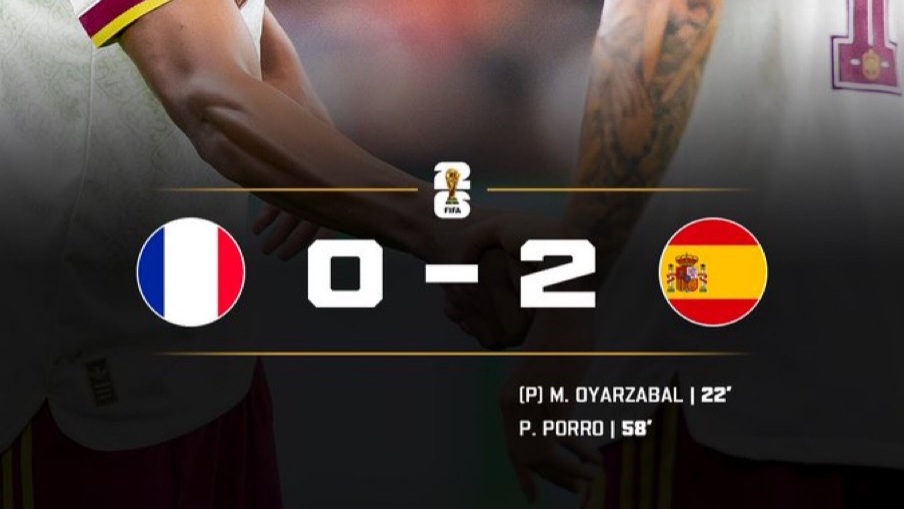
When the World Cup semifinal fixture between France and Spain was confirmed, football fans around the world immediately knew they were about to witness one of the biggest clashes of the tournament. It was a meeting between two European heavyweights packed with world-class talent, tactical intelligence, and players capable of deciding a match with a single moment of brilliance.
Going into the game, many supporters leaned slightly towards France. Their journey through the competition had been convincing, their defensive structure looked organized, and they possessed enough attacking quality to hurt any opponent. Yet at the same time, nobody could honestly dismiss Spain. This is a nation that has built its modern football identity around controlling games through possession, patience, and technical superiority.
That is why the emotions surrounding France’s elimination are mixed.
Many expected France to reach the final, but losing to Spain is hardly an embarrassment. The disappointing part wasn’t necessarily the result—it was the performance. France looked strangely passive for long periods, almost as if they believed opportunities would simply arrive without forcing the issue. Instead of approaching a World Cup semifinal with urgency and intensity, they often appeared to play as though it were an international friendly.
A Semifinal That Never Felt Like One
World Cup semifinals are usually defined by intensity.
Players chase every loose ball. Midfield battles become wars. Every tackle carries significance because one mistake could end years of preparation. Fans expect emotion, desperation, and absolute commitment.
That wasn’t consistently visible from France.
From the opening whistle, Spain settled into their rhythm much faster. They circulated possession confidently while France struggled to apply sustained pressure. Rather than forcing Spain into uncomfortable situations, France often sat back and allowed their opponents to dictate the pace.
There were moments when the French side looked content simply to remain organized instead of actively trying to seize control.
Against an opponent like Spain, that approach is incredibly dangerous.
The Spanish national team thrives whenever opponents allow them time on the ball. Give their midfield enough space, and they will slowly stretch defensive lines before creating openings that didn’t appear to exist seconds earlier.
France never truly disrupted that rhythm.
Spain Were Never Going to Be Pushovers
Perhaps one reason many people feel conflicted about this defeat is because expectations surrounding France became extremely high during the tournament.
Their squad contained experience, athleticism, pace, and enough quality to challenge for another world title.
However, football has a habit of reminding everyone that reputation alone wins nothing.
Spain entered the semifinal with plenty of reasons to believe they could progress.
Throughout the tournament they demonstrated:
- Excellent ball retention.
- Intelligent positional play.
- Defensive discipline.
- Confidence under pressure.
- Clinical finishing whenever chances appeared.
Spain did not simply arrive to participate.
They arrived believing they belonged in the final.
Their passing combinations repeatedly pulled France out of shape, while their movement without the ball forced constant defensive decisions.
Even when France enjoyed brief spells of possession, Spain looked comfortable waiting for opportunities to regain control.
It was the performance of a team fully aware of its identity.
France Lacked Urgency
One of the biggest frustrations for French supporters will undoubtedly be the lack of urgency.
When trailing in a World Cup semifinal, fans expect immediate reactions.
Higher pressing.
More aggressive runs.
Quicker passing.
Greater willingness to take risks.
Instead, France often looked surprisingly calm.
Too calm.
Several attacking moves slowed down unnecessarily, allowing Spain’s defensive shape to recover comfortably.
Rather than moving the ball quickly between midfield and attack, France frequently recycled possession sideways without seriously threatening Spain’s back line.
There seemed to be an assumption that one magical moment would eventually solve everything.
At this level, that is rarely enough.
Elite teams force mistakes.
France waited for them.
Spain Controlled the Tempo
One of Spain’s greatest strengths has always been their ability to control the rhythm of football matches.
This semifinal was another example.
Whenever France attempted to increase the intensity, Spain responded by calmly keeping possession.
Whenever France tried to press, Spain played through it.
Whenever momentum threatened to swing, Spain slowed everything back down.
That psychological control can be just as important as tactical superiority.
Football isn’t only about creating chances.
Sometimes it’s about preventing your opponent from building any confidence whatsoever.
Spain achieved exactly that.
Every successful passing sequence increased their belief while simultaneously frustrating France.
Midfield Battle Decided Everything
Championship matches are often won in midfield.
Whoever controls the center of the pitch usually controls the match.
Spain dominated that area for long periods.
Their midfield players constantly offered passing options, rotated positions intelligently, and ensured that possession rarely became predictable.
France struggled to establish similar control.
Instead of dictating play, they spent too much time reacting to Spain’s movements.
When your midfield spends most of the game chasing rather than creating, attacking opportunities naturally become limited.
That imbalance ultimately shaped the entire contest.
Playing Like It Was a Friendly
This may sound harsh, but many viewers probably shared the same feeling.
France never appeared emotionally desperate enough.
Their body language lacked the urgency normally associated with knockout football.
There weren’t enough moments where players looked willing to chase impossible balls.
Too few challenges carried genuine aggression.
Transitions often lacked speed.
Decision-making seemed cautious instead of fearless.
World Cup semifinals reward bravery.
France often looked comfortable simply staying in the game instead of taking control of it.
Against Spain, comfort can become your biggest enemy.
Credit Must Go to Spain
While criticism of France is understandable, this should never take away from Spain’s achievement.
They executed their game plan brilliantly.
Every player understood their role.
Defensively they remained compact.
Offensively they attacked with patience rather than panic.
Most importantly, they maintained concentration throughout the match.
Big tournaments are won by teams capable of combining technical quality with emotional discipline.
Spain demonstrated both.
They never looked overwhelmed by the occasion.
Instead, they embraced it.
Tactical Discipline Won the Day
Spain’s organization deserves enormous praise.
Their defensive transitions were quick.
Their pressing triggers were well coordinated.
The distances between players remained compact, making it difficult for France to find space between the lines.
Whenever France attempted to attack centrally, Spain crowded those areas.
When France switched play wide, Spain shifted collectively.
Everything looked rehearsed.
Everything looked organized.
France, by comparison, occasionally appeared to rely more on individual quality than collective structure.
Against weaker opponents that approach may succeed.
Against Spain, it rarely does.
Where France Must Improve
Every tournament provides valuable lessons.
For France, this semifinal exposed several areas requiring improvement before future competitions.
Greater Intensity
Elite football demands relentless energy.
France must learn to impose themselves earlier rather than waiting for games to develop naturally.
Faster Ball Movement
Spain repeatedly demonstrated how quick passing destabilizes defensive shapes.
France sometimes held possession for too long.
Increasing the speed of circulation would make them far more dangerous.
More Aggressive Pressing
Allowing technically gifted teams time on the ball is risky.
France needed to press higher and force mistakes closer to Spain’s goal.
Better Mental Urgency
Perhaps the biggest lesson concerns mentality.
Every knockout match should be approached with maximum intensity from the opening whistle.
There should never be room for complacency.
Football Can Be Cruel
One reason football remains the world’s most popular sport is its unpredictability.
A team can appear dominant throughout an entire tournament before producing one disappointing performance at exactly the wrong time.
France experienced precisely that.
Their World Cup journey contained plenty of encouraging moments.
They defended well.
They progressed through difficult knockout matches.
They demonstrated quality worthy of title contenders.
Yet one semifinal performance changed the narrative completely.
That is the brutal beauty of tournament football.
There are no second chances.
Mixed Feelings Will Remain
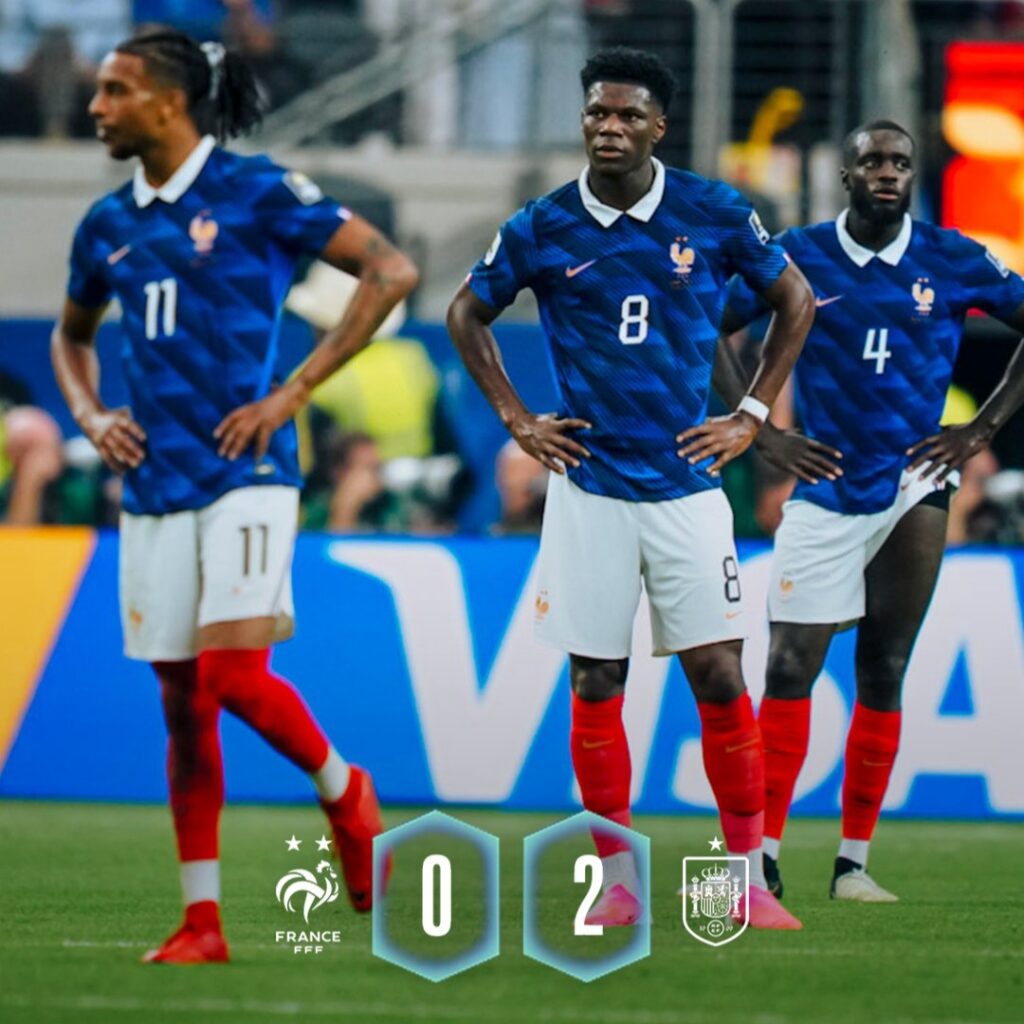
Perhaps that is the perfect way to summarize this semifinal.
Mixed feelings.
France possessed enough quality to reach the final.
Many supporters genuinely believed they would.
At the same time, nobody should pretend Spain were fortunate winners.
They earned their place.
France’s disappointment comes less from losing and more from how they lost.
Fans can usually accept defeat when everything has been left on the pitch.
They struggle much more when they feel their team never truly reached maximum intensity.
Whether that perception is entirely fair or not, it will remain one of the lasting memories of this semifinal.
Spain March On While France Reflect
Spain now advances with confidence, knowing they have eliminated one of the tournament favourites through intelligence, composure, and tactical excellence.
France, meanwhile, must reflect carefully.
This squad still possesses extraordinary talent.
Their future remains bright.
However, talent alone cannot carry a team through World Cup semifinals.
The difference between finalists and eliminated teams often comes down to mentality, urgency, and execution during ninety crucial minutes.
Against Spain, France had the players.
They had the experience.
They had the opportunity.
What they lacked was the relentless intensity expected from a team chasing a place in the World Cup final.
That is why this defeat feels so bittersweet. Spain were outstanding and fully deserved their victory, but many French supporters will walk away believing their team never truly played like a side fighting for football’s biggest prize. And perhaps that is the hardest feeling to accept of all.