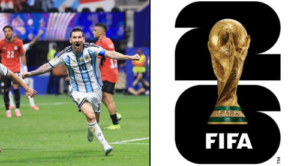
Football has always had a way of reminding the world that reputation means nothing once the referee blows the whistle. Jerseys decorated with stars, generations of success, and billions of supporters cannot guarantee victory when ninety minutes decide everything. That harsh lesson struck Brazil once again as the five-time world champions crashed out of the 2026 FIFA World Cup after a stunning 2-1 defeat to Norway in the Round of 16.
It was a night few predicted and even fewer will forget. Brazil arrived carrying the hopes of an entire footballing nation, while Norway came with belief, discipline, and one of the most feared strikers in modern football. When the final whistle sounded, Brazilian players collapsed to the turf in disbelief while Norwegian fans celebrated the greatest achievement in their country’s football history. For the very first time, Norway had qualified for the quarter-finals of a FIFA World Cup.
History had been written.
Haaland is a Goal Monster
If there was one player who embodied Norway’s fearless performance, it was Erling Haaland. At this point, describing him as merely a world-class striker almost feels inadequate. Every tournament seems to create moments that define legends, and Haaland continues to build a collection of those moments at an astonishing rate. Against Brazil, under the brightest lights and against one of football’s most decorated nations, he once again showed why fans around the world simply call him “HIM.”
That nickname is not about arrogance or social media hype. It represents something far more important. Great players perform consistently against weaker teams, but the truly elite players rise when the pressure becomes unbearable. They deliver when their country needs them most. Haaland has developed a reputation for doing exactly that. Whether in club football or on the international stage, defenders know what is coming, yet they still struggle to stop him.
He is a goal monster in the purest sense of the phrase.
Unlike many modern forwards who drift wide looking for touches, Haaland lives inside the penalty area. Every movement has purpose. Every sprint is calculated. Every shoulder drop creates half a yard of space. His physical strength allows him to bully defenders, his speed punishes defensive lines that push too high, and his finishing remains among the best in world football. Give him one clear opportunity, and there is every chance the ball ends up in the back of the net.
Brazil knew all of this before kickoff.
They had prepared for him.
They had studied him.
Yet they still could not contain him.
Brazil Shocking Exit
Brazil actually began the match with confidence. Their passing was crisp, their midfield controlled possession, and their attacking players looked eager to stamp their authority on the contest. For long periods in the opening stages, Norway were forced to defend deep, absorbing wave after wave of Brazilian pressure.
It looked like the familiar story of football’s giants imposing themselves on ambitious underdogs.
But Norway never panicked.
Instead of chasing the ball recklessly, they trusted their defensive organization. Their midfield remained compact, their defenders resisted the temptation to dive into challenges, and every player understood their role. Rather than matching Brazil’s technical brilliance, Norway relied on patience, discipline, and efficiency.
That tactical maturity frustrated Brazil.
As the first half progressed, Brazil enjoyed possession but created fewer clear-cut opportunities than expected. Every blocked shot increased Norwegian confidence. Every successful tackle energized the players in red. Gradually, the balance of the game began to shift.
Then came the moment every Brazilian defender feared.
A quick transition released Norway into space, and Haaland found himself exactly where elite strikers always seem to appear. His movement separated him from his marker by just enough distance to receive the ball cleanly. There was no hesitation, no unnecessary touches, and no panic. The finish was clinical, powerful, and ruthless.
One chance.
One goal.
That is what separates good strikers from generational ones.
Many players require five or six opportunities before finding the net. Haaland often needs only one. His efficiency has become almost frightening. It explains why defenders spend entire matches trying to deny him even the smallest opening, because they understand the consequences of failure.
The goal completely transformed the atmosphere inside the stadium.
Brazil suddenly found themselves chasing the game, while Norway played with growing confidence. The underdogs no longer looked surprised to be competing with Brazil—they looked convinced they belonged on the same stage.
That mental shift changed everything.
Brazil responded by committing more players forward. Full-backs advanced higher, midfielders took greater risks, and the spaces behind their defensive line became increasingly exposed. Norway welcomed those openings. Every recovery of possession immediately became a dangerous counterattack.
This is where Norway deserve enormous praise.
Many teams attempt to defend a lead against footballing giants by retreating into their own penalty area for the remainder of the match. Norway refused to do that. They continued pressing at the right moments, remained brave in possession, and believed they could score again instead of simply protecting what they already had.
That courage ultimately proved decisive.
Haaland continued to stretch Brazil’s back line with relentless runs. Even when he wasn’t touching the ball, he demanded the attention of two or three defenders. That constant threat created space for teammates to attack. His influence extended far beyond his goals because every Brazilian defender had one question fixed in their mind:
“Where is Haaland?”
The psychological pressure he places on opponents cannot be measured by statistics alone.
Brazil eventually found a way back into the contest, reminding everyone why they remain one of football’s greatest nations. Their equalizer reignited hope among supporters, and for a brief period it felt as though experience and quality would finally overwhelm Norway.
Championship teams often find another gear when faced with adversity.
Brazil searched desperately for that gear.
Instead, Norway found another one first.
The winning goal perfectly reflected everything that has made Norway one of the tournament’s surprise stories. It combined intelligent pressing, rapid transition, decisive movement, and clinical finishing. Brazil’s defence, which had looked composed for much of the evening, suddenly appeared vulnerable under sustained pressure.
When the decisive strike crossed the line, silence spread through the Brazilian supporters.
Norwegian fans erupted.
The remaining minutes became an emotional battle. Brazil threw bodies forward, launching attack after attack in search of an equalizer that would keep their World Cup dream alive. Norway defended with extraordinary determination, blocking shots, winning aerial duels, and refusing to surrender.
Every clearance felt like a goal.
Every interception moved them one step closer to history.
Then came the final whistle.
First time for both Nations
For Norway, it was the greatest night their national team has ever experienced. Never before had they reached the quarter-finals of a FIFA World Cup. This victory was about far more than eliminating Brazil. It represented decades of progress, belief, and investment finally producing a historic breakthrough on football’s biggest stage.
Generations of Norwegian supporters had waited for a moment like this.
Now they have one that will be remembered forever.
Much of the credit belongs to Haaland, but reducing this achievement to one player would be unfair. Norway succeeded because every player embraced their responsibilities. Their defensive organization frustrated one of the world’s most gifted attacks. Their midfield matched Brazil’s intensity. Their transitions were devastatingly effective. Above all, they believed they could win long before the rest of the football world did.
That belief is often the hidden ingredient behind the greatest World Cup upsets.
Brazil, meanwhile, are left searching for answers once again.
This latest elimination continues a worrying trend of painful exits at major tournaments. Time after time, Brazil arrive among the favourites, only to see their dreams end earlier than expected. The talent remains undeniable, but converting that talent into World Cup glory has become increasingly difficult in the modern era, where tactical discipline often proves just as valuable as individual brilliance.
One conversation will inevitably return following this defeat, and it involves Neymar and his last dance in the World Cup.
Although Brazil have produced another exciting generation of attacking players, Neymar’s absence continues to leave a noticeable emotional and creative void. At his peak, he possessed the rare ability to slow chaotic moments, draw defenders out of position, and create opportunities that seemed impossible. Beyond his technical quality, he also carried enormous responsibility, often becoming the emotional heartbeat of the national team during difficult moments.
Whether supporters agree or disagree about his legacy, matches like this remind everyone how influential he was whenever Brazil faced the biggest challenges. His story deserves its own discussion, and this defeat will undoubtedly reignite debate over what Brazil have lost since his era began to fade.